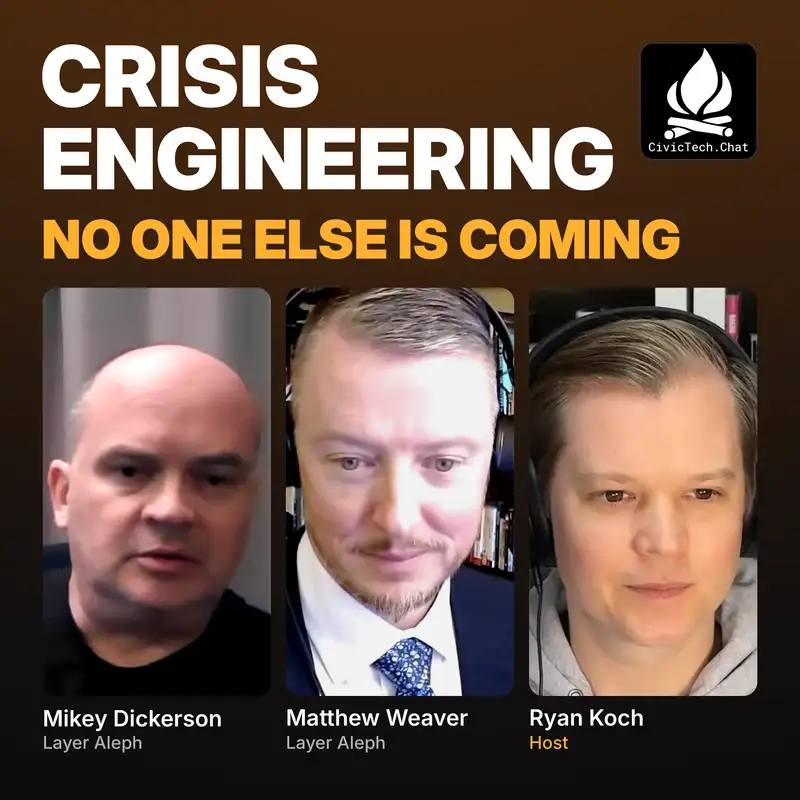
Crisis Engineering: No One Else is Coming
Layer Aleph crisis-engineering practitioners Matthew Weaver and Mikey Dickerson join Civic Tech Chat host Ryan Koch to explain how organizations can recognize a genuine crisis and use crisis engineering to drive transformation. Drawing on their work during the healthcare.gov rescue, they discuss sense-making, operational practices, organizational authority, and why teams should not mistake emergency rituals for lasting capability.
Key Topics
- Weaver and Dickerson describe their crisis-engineering work at Layer Aleph and the different experiences that motivate their work for communities and civic systems.
- The book grew from a review of engagements that did and did not produce material change, then became a way to name and explain their approach.
- Mikey Dickerson outlines Tech Viaduct’s effort to help prepare for future government reform, while Weaver describes the Viable Systems Alliance’s focus on connecting small, empowered interdisciplinary teams with organizations that need change.
- Dickerson recalls the 2013 healthcare.gov assessment: many initial failures were basic integration and configuration problems, but the site still required sustained work to become reliable.
- Weaver describes the healthcare.gov operations room, daily decision-making, an always-on phone bridge, and a shared Google Doc log as practical foundations for coordinated crisis response.
- The guests define five crisis indicators: fundamental surprise, failed sense-making, disrupted core processes or outcomes, high visibility, and a rigid deadline. They suggest three to five indicators point to a crisis requiring transformation.
- Weaver and Dickerson advise workers who are privately compensating for a broken system to assess whether others recognize the problem; sometimes stopping the rescue work or leaving is the practical choice.
- Dickerson explains cybernetics and sense-making as ways to understand information flow, feedback, and how people construct stories about their circumstances; Weaver emphasizes that a plausible shared account can matter more than isolated accuracy.
- The guests discuss how procurement structures can leave no one accountable for an end-to-end public technology project, and how simple tests like changing one word on a website reveal an organization’s span of control.
- They distinguish durable crisis capability from zombie crisis organizations, and close with an empowering message: people must improvise with the tools they have because no one else is coming.
Chapters
00:00 Meet Layer Aleph’s crisis-engineering practitioners
02:29 Why the team turned its experience into a book
06:38 Unexpected readers and the book’s reach
09:23 Tech Viaduct and rebuilding government capacity
11:27 Why small empowered teams drive transformative change
13:29 The first 72 hours of the healthcare.gov rescue
17:19 From emergency response to daily operations
20:15 The phone bridge and shared log that kept teams aligned
24:13 Five indicators of a genuine crisis
31:10 How to tell whether your organization is really in crisis
35:04 Cybernetics, sense-making, and how decisions happen
40:40 How crisis stories get constructed after the fact
45:15 Why government technology projects lack end-to-end accountability
49:27 The one-word change test and organizational control
53:29 When to stop compensating for a broken system
58:05 How emergency rituals persist after the crisis
01:02:06 Zombie crisis organizations and lasting capability
01:03:24 The final lesson: it’s your turn
Resources and shoutouts
- Viable Systems Alliance
- Tech Viaduct
- Layer Aleph
- Ross Ashby
- Stafford Beer